



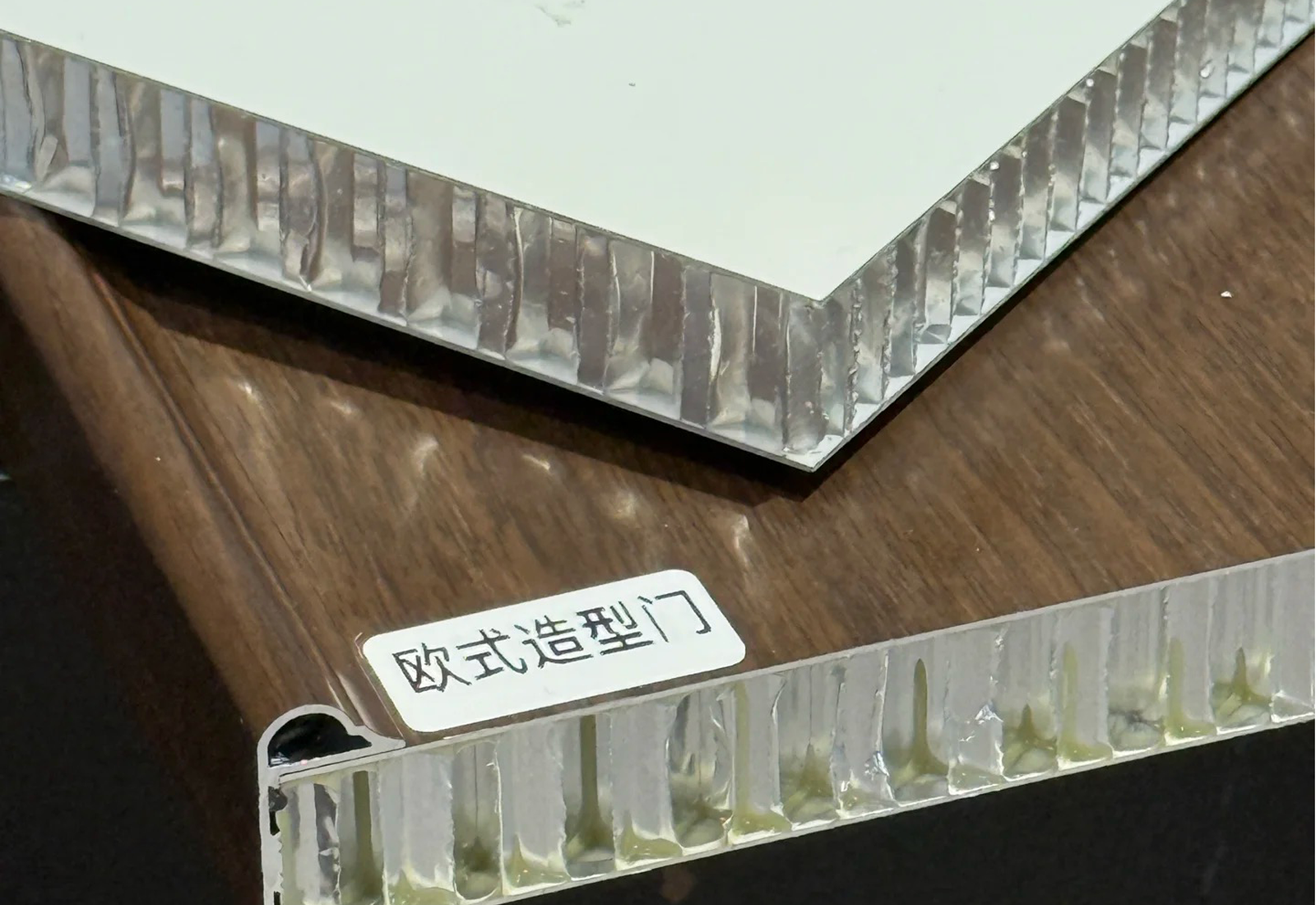
On one hand, it is “light” – the honeycomb structure of the core layer has significantly reduced weight, which is more than 50% lighter than traditional boards, reducing the load-bearing burden; On one hand, it is “strong” – the honeycomb mechanics design disperses pressure, resists impact and bending, and has strength comparable to metal sheets. Combining moisture resistance, fire resistance, and sound insulation, aluminum honeycomb panels have become an all-around player in various fields.
In the field of architecture, it is the “beauty responsibility” of exterior wall decoration: it can customize colorful coatings, adapt to modern curtain wall and canopy designs, has strong weather resistance, and remains stable even after long-term exposure to wind and rain; It is also a practical choice for interior decoration, used to create ceilings and partitions, which not only saves space but also provides sound insulation, making offices and shopping malls more simple and atmospheric.
In the field of transportation, it is a lightweight “right-hand man”: the interior of high-speed rail carriages and RV casings are made with it, reducing the weight of the vehicle while also resisting bumps and impacts, improving passenger safety; Logistics carriages and refrigerated trucks also favor it, with its moisture-proof and heat-insulating properties, making the transportation of goods more secure.
In the fields of industry and home furnishings, it also performs well: it balances protection and lightweight for equipment casings, reducing the difficulty of equipment handling; Customized furniture and display cabinets use it as a panel, which is waterproof, wear-resistant, easy to clean, and balances aesthetics and durability.
From building exterior walls to transportation interiors, from industrial equipment to home life, aluminum honeycomb panels provide efficient and environmentally friendly solutions for different scenarios with their characteristics of “light yet strong, stable yet excellent”, redefining more possibilities for material applications.
Related posts
The all-aluminum closely fitted wall panel, with precision jointing technology down to the millimeter level, ensures that there are no visible joints or areas prone... Continue reading
Add comment